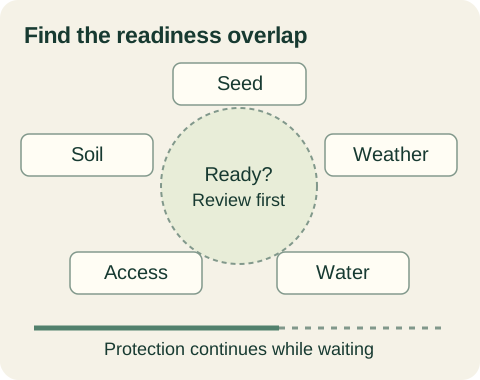
A practical application window is the overlap of suitable ground, the specified vegetation's requirements, safe access and a workable establishment arrangement. A calendar month alone cannot confirm that overlap. Ask the responsible contractor or specialist what conditions govern the work and how a delay will be handled. Keep the plan flexible enough to protect exposed ground and maintain responsibilities when weather or water permissions change.
Start with the actual seed and project objective
Identify the specified vegetation and who advises on its establishment requirements. A maintained turf package, an agricultural forage planting and a native restoration project may use different reasoning for timing. Avoid copying a date range from one context into another. Record the recommendation's basis and any dependencies on soil condition, moisture, placement method or later management.
The Alberta Forage Manual describes short seasons, moisture constraints and adaptation in an agricultural context. It supports considering regional differences without creating a universal Alberta hydroseeding deadline. Ask how the actual site and seed change the plan. If the intended window is missed, the next step should be a review of options rather than automatically applying the same material on the next available day.
Use climate history as background
ECCC's climate normals provide historical statistics associated with stations and reference periods. They help describe regional context but do not predict the weather during a particular project's establishment period. Check the station and period before drawing a conclusion, and keep any general comparison distinct from a current forecast or an observation at the property.
A planner can record that the project is exposed to a seasonal risk without inventing a probability of successful germination. Use the actual forecast and site conditions when scheduling, and revisit them close to application. A quote written weeks earlier should not be treated as proof that the ground and care arrangement remain suitable on the booked date.
Define readiness in observable project terms
Ask the contractor what it needs to inspect before proceeding: the prepared surface, unresolved drainage issues, access, material availability and the approved specification are examples. Put those items in a readiness checklist with an owner for each. A completed item should have evidence proportionate to its importance, such as a document, site observation or accepted preparation boundary.
Avoid inventing a universal temperature, moisture threshold or number of dry days for all seeds and products. If a threshold matters, cite the actual product instruction or qualified recommendation and identify how it will be measured. This makes the decision reviewable and prevents a vague good-weather condition from being interpreted differently by the owner and crew.
Check the care arrangement beyond application day
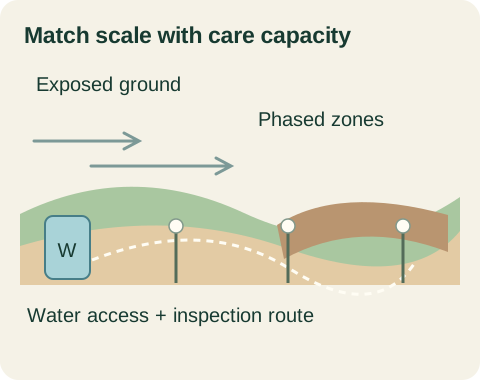
The relevant question is not only whether a crew can apply the treatment tomorrow. Determine who can inspect it afterward, what lawful water strategy is available and how growth or damage will be reviewed. An owner's absence, a water-system change or a continuing construction route can make an otherwise available appointment impractical.
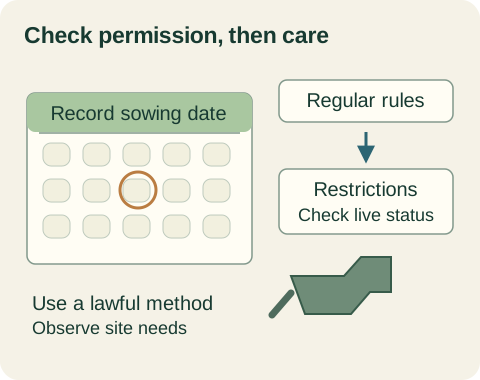
For Calgary, the current regular schedule and any temporary restrictions should be checked independently. Elsewhere, confirm the applicable local water rules and resource arrangements. Do not extend Calgary's exception or restriction table to another municipality. The schedule should show where the project's own permission information is obtained and who checks it when circumstances change.
Plan the waiting period
If application is postponed, decide what protects exposed soil, who inspects it and how readiness will be restored. The waiting period may require actions even though no seed has been placed. Record which party remains responsible and whether a return inspection is included. A changed date should not create an unnoticed gap between grading completion and vegetation work.
The Alberta general-reclamation library includes separate construction-shutdown guidance, illustrating that workability and protection can require their own decisions. Use the project-specific requirements and appropriate adviser rather than treating delay as a purely administrative matter. If a temporary treatment is proposed, clarify its purpose, later removal or interaction with final vegetation, and approval process.
Connect routine visits with event-based review
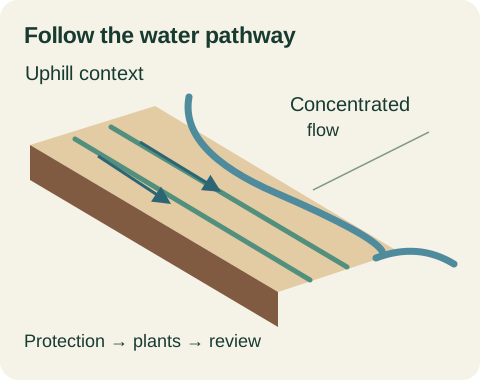
Schedule planned observations and leave capacity for additional review after relevant events or when the specification requires it. Record who checks runoff damage, exposed areas and changes in site condition. A visit plan based only on elapsed days can miss the moment when a problem becomes important. The actual inspection obligations and qualification requirements remain project-specific.
The establishment planner estimates time from the visit assumptions you enter. It does not decide how often a site legally or technically needs inspection. Keep the entered routine count labelled as a workload assumption, then add the actual required events and responsibilities in the project notes. This prevents a convenient time calculation from being mistaken for a complete monitoring specification.
Apply the plan to a hypothetical delay
Imagine an acreage treatment scheduled after final preparation, followed by heavy rain that changes access and a forecast with no clear near-term window. The agreed readiness process pauses the operation, assigns temporary protection and requires a recheck. The owner knows who makes the next decision and which responsibilities continue while the appointment moves.
When the site is reviewed again, the team confirms the actual surface, material records, water strategy and caregiver availability. The new date is accepted because those requirements align, not simply because the calendar moved forward. Preserve that decision with the project record. A condition-based plan can explain delays and adjustments honestly without guaranteeing an establishment result from seasonal timing alone.
Sources + further reading
- Government of Alberta: General reclamation guidelines
- Government of Alberta: Alberta Forage Manual
- Environment and Climate Change Canada: Canadian Climate Normals
Source review: 2026-10-04. Requirements and programs can change; confirm the current details with the authority or provider.