A material schedule should do more than list a bag count. It should let a reviewer follow each quantity back to an identified product, a documented basis and the area in the project brief.
01 / Establish identity before arithmetic
Start a separate entry for each specified component. For seed, retain the exact product description, species or mixture information supplied, lot identifier and available analysis. Keep a copy of the label with the project record rather than relying on a shortened name in an email.
Canada's seed-testing and grading guidance is maintained by the Canadian Food Inspection Agency. Its resource index separates mixture labelling, germination standards and testing topics. Use the applicable current guidance with the supplier when interpreting Canadian product documentation; a foreign technical example does not replace that review. See the CFIA seed-testing and grading resources.
02 / State the mass basis
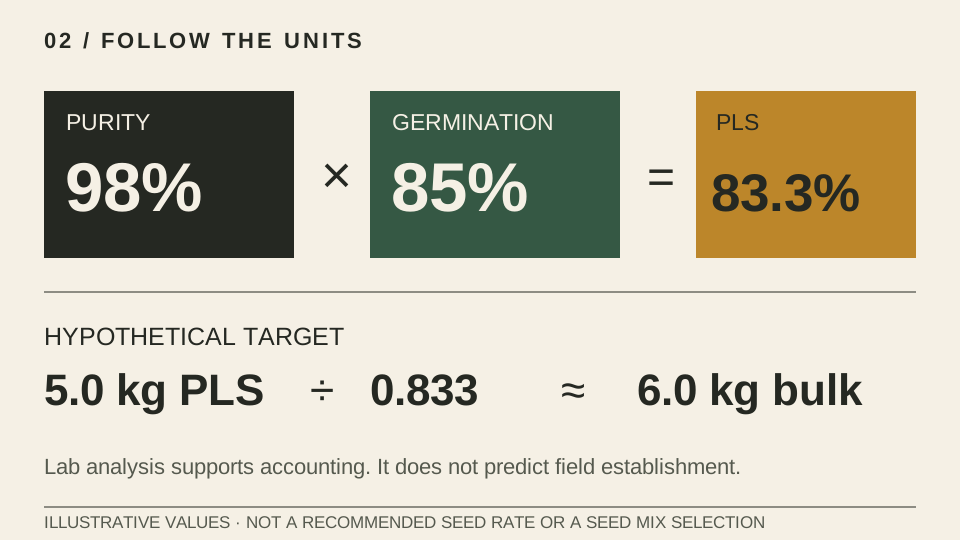
Pure live seed, or PLS, is an accounting concept based on seed purity and the applicable germination analysis. The USDA Natural Resources Conservation Service explains the simple calculation as purity percentage multiplied by germination percentage, divided by 100. Its seed-quality note also distinguishes analysis information from what will happen in the field. Read the NRCS seed-quality technical note.
For a hypothetical lot with 98% purity and 85% germination, that arithmetic gives 83.3% PLS. If a hypothetical quantity target is 5.0 kilograms PLS, dividing 5.0 by 0.833 gives approximately 6.0 kilograms of bulk seed. This example supplies no recommended rate or mix. Have the appropriate adviser confirm how dormant or hard seed and the actual test information belong in the specified calculation.
03 / Keep the calculation trail
Write the measured area, the specification's quantity basis, the entered rate and the resulting quantity on the same line. Label the units at every step. If the specification uses bulk mass, say so; if it uses PLS, show the analysis and conversion. Do not quietly substitute one basis for the other.
Keep fibre, tackifier and other components in separate entries with their own identified basis. A combined slurry description can obscure which quantity refers to which material. The schedule records an approved specification; it does not choose a recipe or establish the compatibility of products.
04 / Reconcile the delivered record
When information changes, retain the previous entry and note what replaced it. Compare the delivered lot identifier with the one used for planning. Ask the responsible person to review a substitution before carrying its analysis into the quantity calculation. A familiar brand name alone is insufficient to explain a changed lot record.
Provide a place for the delivery date, packaging description, document reference and any unresolved question. Keep photographs readable enough to show the relevant label and connect each image to its entry. The aim is traceability, not a collection of disconnected attachments.
A good schedule ends with a reviewer who can explain the numbers and a record of the specified basis. It cannot guarantee germination, field coverage or establishment. Continue with a dated observation log to record what was actually seen at the site.
Put the note to work
Record the relevant observations, documents and unanswered questions in your project brief.
Prepare your request ↗